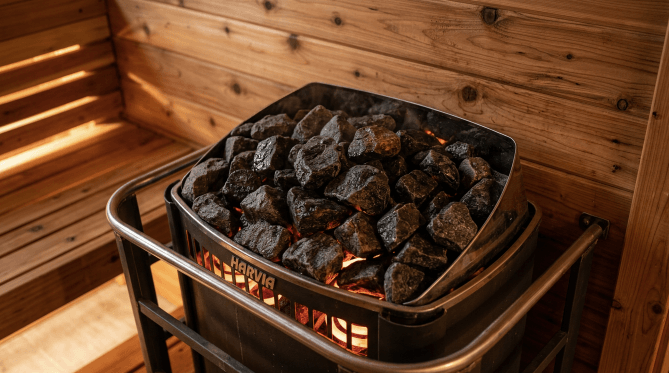
A sauna heater and the wood around it should be cleaned with mild soap and water or a wood-safe cleaner applied sparingly, never with bleach, ammonia-based sprays, or oil-based furniture polish, all of which can discolor cedar or off-gas unpleasant fumes once the room heats back up. Stones are handled separately from the wood, rearranged and replaced rather than scrubbed. Below are the specific questions that come up most for anyone new to maintaining a heater in daily or weekly use.
What Should I Actually Clean Around the Heater?
Focus on the bench surfaces nearest the heater, the floor directly beneath the stone bed where drips land, and the guard rail itself, which collects sweat residue and dust faster than surfaces further from the heat source. A quick wipe with a cloth dampened in mild soap and water after each session, followed by drying with a clean towel, handles most day-to-day buildup. Standing water left on cedar is the bigger long-term risk to the wood than the sweat itself, so drying surfaces rather than just wiping them wet matters more than the cleaning product you choose.
Which Cleaning Products Are Safe Near a Hot Heater?
Mild, unscented soap diluted in water is the safest all-purpose option, since it has nothing left behind to off-gas when the room heats back up for the next session. Cleaners made specifically for sauna or cedar surfaces are formulated with this in mind and are worth the modest extra cost if you use the sauna often. Avoid bleach, ammonia-based glass and surface cleaners, and oil-based furniture polish. All three can discolor cedar, basswood, or hemlock over time, and any residue left behind can produce an unpleasant smell or fumes once the wood heats up again, which is a bigger problem in an enclosed sauna room than in an open living space.


How Do I Handle the Stones Without Damaging Them?
Stones are not scrubbed or washed the way you would clean a countertop. Instead, periodically rearrange the stone bed so heat and moisture exposure is more even, and pull out any stones that show visible cracking or a heavy white mineral crust. A full stone bed replacement roughly once a year under regular multi-session-per-week use keeps steam quality consistent and reduces strain on the heating element, which has to work harder to heat degraded stone.
Why Is There White Residue Near the Heater?
White mineral residue on and around the stones is almost always mineral scale from hard water used in the ladle bucket for löyly. The fix is straightforward: switch to filtered or distilled water for pouring on the stones. This single change reduces the visible crust buildup and also protects the heating element itself from the same scale, which can shorten element life over time if left unaddressed.
How Do I Protect the Wood Long-Term, Not Just Clean It?
Beyond routine wiping, protecting sauna wood over the years means avoiding sealants and stains near the heat zone, since most finishes are not rated for repeated high-heat exposure and can smoke or smell when the heater is running. If you are shopping for a heater with a guard rail and clearance profile that keeps the hottest zone further from bench wood in the first place, you can browse the collection to compare models by clearance distance and guard rail design, which affects how much of the wood surface actually sees direct heat exposure over the life of the unit.
What Cleaning Mistakes Damage Wood the Fastest?
Leaving standing water on cedar benches instead of drying them after cleaning is the single most common mistake, since repeated moisture exposure without drying time leads to graying and, eventually, softening of the wood grain. Using a stiff scrub brush or abrasive pad on the wood to remove sweat stains is a close second, since it strips the wood’s natural surface texture and leaves it rougher and more absorbent than before, which makes the next stain worse rather than better.
How Often Should the Guard Rail and Control Panel Be Cleaned?
The guard rail, being metal rather than wood, can tolerate a slightly more thorough wipe-down with mild soap and water, and doing this weekly keeps sweat residue from building into a sticky film that is harder to remove later. The control panel, whether mechanical or digital, should only be cleaned with a barely damp cloth, never a wet one, since moisture working into the dial or display housing is a common cause of premature electronic failure on digital-control heaters. Wipe the panel last, after the rest of the room, using the driest cloth of the session.
Does Sauna Wood Need Any Treatment Beyond Cleaning?
Untreated cedar, basswood, and hemlock are chosen specifically because they hold up to heat and humidity without needing sealants, stains, or oils, and adding a finish not rated for sauna conditions is more likely to cause problems than solve them. Some owners lightly sand a bench surface every year or two to refresh the texture if it has become rough from years of sweat and cleaning, but this is optional and only needed on heavily used surfaces. There is no equivalent of furniture polish or wood conditioner that belongs in a sauna room, and product marketed for general indoor wood care should stay out of the room entirely.
See also: Are Peptides Safe for Teens and Young Athletes?
Seasonal Deep Cleaning Beyond the Weekly Routine
Roughly twice a year, it is worth doing a more thorough pass: pulling benches away from the wall if they are not fixed, checking for any moisture that has collected behind them, inspecting the stone bed fully rather than just the top layer, and confirming the guard rail mounting hardware has not loosened from repeated heat cycling. This deeper check catches problems, like a bench beginning to warp from trapped moisture behind it, well before they become expensive to fix, and it takes less than an hour twice a year for most home sauna setups.
Frequently Asked Questions
Can I use regular cleaning spray on cedar near the heater?
No. Standard household cleaners contain chemicals that can off-gas when the wood heats up during the next session. Stick to mild soap and water, or a cleaner made specifically for sauna wood, applied sparingly and wiped dry.
How do I clean the heater’s stones?
Stones are not scrubbed like the rest of the room. Rearrange or flip them occasionally and remove any that show cracking or heavy mineral crust, replacing the stone bed roughly once a year under regular use.
Why does white residue build up around the heater?
White mineral residue near the stones usually comes from hard water used in the ladle bucket. Switching to filtered or distilled water for löyly reduces the buildup and protects the heating element too.
How often should the room around the heater be cleaned?
A quick wipe-down of benches and the floor near the heater after each session, plus a deeper clean every one to two weeks depending on use, keeps residue from accumulating on the wood.
Is bleach ever safe to use in a sauna room?
Avoid bleach entirely near the heater and wood surfaces. It can discolor cedar and leaves fumes that concentrate when the room heats back up, which mild soap and water avoids.
References
- Clinical Effects of Regular Dry Sauna Bathing: A Systematic Review, Evidence-Based Complementary and Alternative Medicine, 2018
- Cardiovascular and Other Health Benefits of Sauna Bathing: A Review of the Evidence, Mayo Clinic Proceedings, 2018
- Benefits and risks of sauna bathing, The American Journal of Medicine, 2001
By Owen Bradshaw